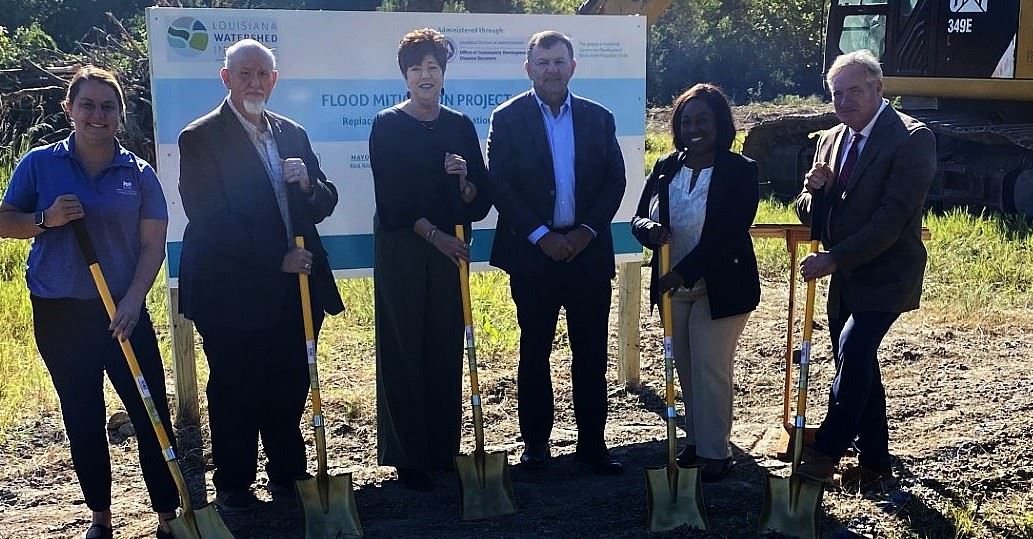
 The City of Leesville is proud to announce the groundbreaking of a major flood mitigation project held on Wednesday, October 16. Mayor Rick Allen and city officials joined community members at the site to celebrate this milestone in Leesville’s ongoing commitment to safety, sustainability, and smart growth.
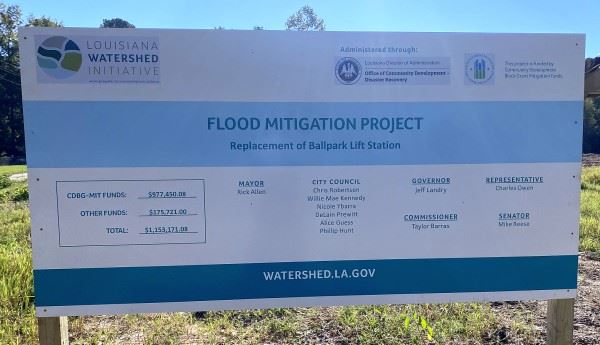
This vital infrastructure upgrade will replace the aging ballpark lift station currently located at the site, a key component in Leesville’s stormwater and wastewater management system. It was made possible through a $977,450.08 grant from the Community Development Block Grant Mitigation (CDBG-MIT) Program. Their assessment drew on Leesville’s Hazard Mitigation Plan and regional flood data to pinpoint the ballpark area as a high-risk zone—making it a priority for infrastructure investment.
What’s a Lift Station—and Why Does Leesville Need One?
When heavy rains hit, low-lying areas can quickly fill with water. A lift station is like a giant sump pump for the city—it helps move water and wastewater uphill, away from places where it could cause flooding.
Here’s how it works:
- Water flows into an underground tank (called a wet well).
- When the tank fills up, powerful pumps kick in.
- These pumps push the water through pipes to higher ground, where it can safely continue through the city’s drainage or sewer system.
By replacing the aging ballpark lift station, Leesville is making sure this system works faster and more reliably—especially during storms. That means fewer backups, less flooding, and better protection for homes, parks, and public spaces.
Funding for this Project
This project is mostly funded from the Louisiana Watershed Initiative, administered by the Louisiana Office of Community Development with Community Development Block Grant Mitigation (CDBG-MIT) funding from the U.S. Department of Housing and Urban Development. The program supports strategic, high-impact projects that reduce disaster risks and build long-term resilience in communities affected by past disasters. Leesville’s project reflects the program’s goals of data-informed investment, infrastructure improvement, and sustainable risk reduction.